Producer: Nyabirongo Station, Agri Evolve
Region: Rwenzori Mountains
Variety: SL14 & SL28
Process: Natural Extended Fermentation
Altitude: 1800 masl
Harvested: 2026
Cupping notes: Sweet candied sour cherry, banana, dried sweet tropical fruits, dark cherry, white chocolate and hibiscus.
Lava Cherry brings together the work of around 350 smallholder farmers in Uganda’s Rwenzori Mountains. Grown at around 1,800 metres above sea level, this lot combines SL14 and SL28 varieties, with processing carried out by Agri Evolve at their Nyabirongo station.
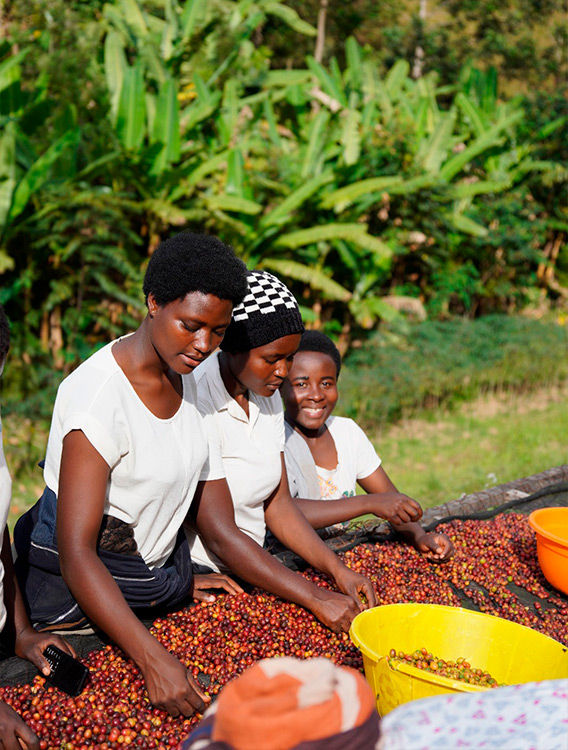
The region’s fertile soils, two annual rainy seasons and stretches of sunshine provide favourable conditions for growing and drying coffee. Farmers pick selectively, choosing deep-red cherries at full ripeness. These small harvests are brought together at Nyabirongo, where careful fermentation and drying shape the character of the finished lot.
Lava Cherry follows an extended fermentation natural process. After picking, the cherries undergo a 48-hour fermentation before being transferred to raised beds to dry whole in the sun. Drying begins in thicker layers, which are gradually spread more thinly. The cherries are turned regularly throughout, helping them dry evenly. Once ready, the dried fruit is removed and the green beans are graded and colour-sorted before being prepared for export.
Agri Evolve is a family-run business working with coffee-growing communities in western Uganda. Since 2016, they have been buying ripe cherries for central processing, helping farmers move away from drying coffee at home, where difficult conditions and limited equipment can make consistent quality harder to achieve.
Their Nyabirongo facility, built in 2022, brings wet and dry milling together, allowing the team to oversee each stage from freshly delivered cherries to export-ready green coffee. This gives the farmers’ work a better chance to shine and helps connect their harvests with specialty coffee buyers.
Through their ACE programme - Agriculture, Community and Environment - Agri Evolve also provides practical support beyond processing. This includes farm visits, agricultural training, nurseries, native tree planting and savings groups, alongside community projects. The aim is to help growers improve both the quality of their coffee and the long-term viability of their farms.