Producer: Nyabirongo Station, Agri Evolve
Region: Rwenzori Mountains
Variety: SL14 & SL28
Process: Natural
Altitude: 1800 masl
Harvested: 2026
Cupping notes: Blueberry, mixed berry jam, candied lime, milk chocolate, peaches and molasses.
Bantu Blossom comes from the mountain farms of Uganda’s Rwenzori region, bringing together coffee grown by around 200 smallholder producers. Cultivated at 1,500 - 2,000 metres above sea level, this lot combines SL14 and SL28 varieties and follows a traditional natural process, with the cherries dried whole in the sun.
Harvesting starts with selectively picking fully ripe cherries. Farmers deliver these to local collection centres, where Agri Evolve arranges transport to its Nyabirongo processing facility. Coffees are grouped by growing location and altitude, preserving traceability as individual harvests come together.
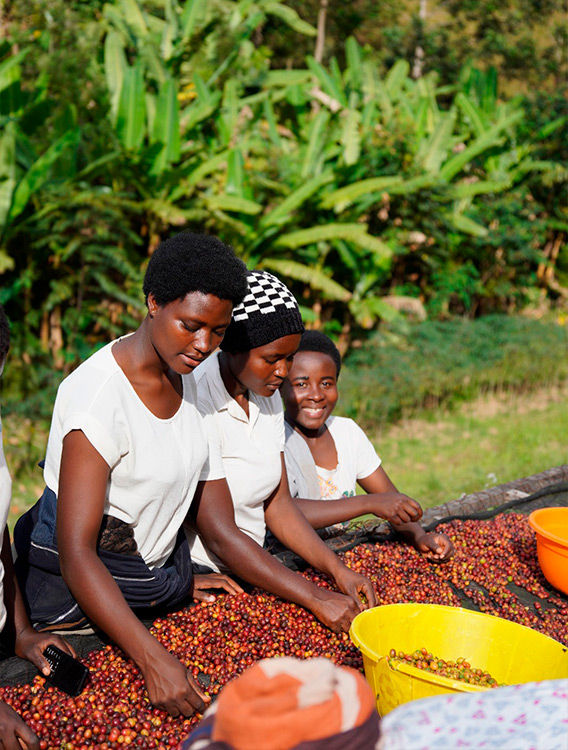
At the station, the cherries are floated in water to help separate out less dense fruit and defects. The selected cherries are then spread onto raised drying beds, where they spend several weeks drying in the sun. Regular turning helps keep fermentation and moisture loss even throughout the lot.
Once the cherries reach the required moisture level, the dried fruit is removed. The green coffee is then graded and colour-sorted before being packed for export.
Rwenzori has long had the conditions for producing excellent Arabica: high elevations, plentiful rainfall and fertile soils. Most coffee here comes from small family plots, typically just one or two acres. Historically, inconsistent harvesting, processing and delays prevented much of that potential from reaching the cup. Agri Evolve has been working to change this through farmer training, incentives for harvesting ripe cherries and investment in processing infrastructure.
Its Nyabirongo facility, built in 2022, houses both wet and dry mills. Bringing these stages together allows the team to oversee quality from the arrival of fresh cherries through to the final sorting of green coffee.
Agri Evolve’s work extends beyond buying and processing coffee. Through its ACE programme - Agriculture, Community and Environment - the company supports better farming practices alongside projects that address local needs.
These include tree nurseries, access to water, school sanitation and vocational training for young people. The aim is to make improvements in coffee quality part of a wider, lasting benefit for the communities growing it.